Category: Reviews
September 2026 Reviews
I had anticipated my reading to taper off a bit as I immersed myself in another activity, but still managed to find time to read several books and a nifty little zine this month. The fiction ranged from classic to recent, and the nonfiction followed a maritime theme.
August 2026 Reviews
Despite a bunch of other activities clawing at my schedule in August, I managed to read six books that ranged across fantasy, sci-fi, and nonfiction. We also hosted another adorable batch of foster kittens, who joined me for much of my reading.
July 2026 Reviews
I don’t follow the ‘summer beach reads’ trends the publishing industry marketers push; to me, good books have no season, whether they’re ‘heavy’ or ’light.’ In July, my reading included a literary novel, how-to guides, science nonfiction, and only a couple of heavily hyped bestsellers.
Reviews for June 2026
My June reading was a very mixed bag, in both the assortment of subjects and the quality of the writing. Only one of the books was both bad enough and long enough to make me quit before the end, though, and a couple of them were quite good.
May 2026 Reviews
Motivated in part by a guest, I read even more books than usual last month. From literary fiction to dark fantasy, satire, and two very different works of nonfiction, here’s what I thought of them.
April 2026 Reviews
As a relatively mild Mud Season came and went here in western Massachusetts, I read an immensely fun LitRPG bestseller, some dark fantasy stories, an eye-opening historical survey, and a lovely tale of people facing disaster with dignity and art.
Reviews for March 2026
My March reading spanned global capitalism, a guide to personal journaling, a depressingly realistic dystopia, a page-turner about taxes, and a celebrated time travel novel. Here’s what I thought of each of these books.
Reviews for February 2026
The Great Blizzard of 2026 only grazed us, with less than a foot of snow falling, but between the other snowstorms and a brutal cold snap, it was still a good month to curl up in a warm house with some good books.
Reviews for January 2026
Last year’s reading pace shows no signs of abating, and in January I happened to pick some great books from my long list. The three award-winning novels I read were all excellent, in completely different ways, and the nonfiction book that accompanied me through most of my January workouts was a solid piece of reporting with only a few minor flaws. Laura and I also finished the third co-operative game in a fun series.
December 2025 Reviews
December arrived cold and snowy, perfect weather for sitting indoors with a cup of hot tea and a good book. I finished a trilogy I’d started a couple of months ago, read two books about food, and enjoyed a well-crafted memoir.
November 2025 Reviews
In November, I read three books and listened to a fourth, which I count as reading. The selection included an interesting historical biography, a somewhat informative book on corporate innovation, and two pretty good novels. Laura and I also played a couple of excellent co-operative iPad games.
Reviews for October 2025
My October reading included a fantasy trilogy, the first volume of another trilogy, and a fun book about the joys of poetry.
Reviews for September 2025
In September I read a hilarious satire, a pretty good continuation of a fun series, and a work of speculative fiction that could also qualify as serious literature. After that, I played a few good games my wife recommended.
Book Reviews for August 2025
In August, I went through three fantasy novels, then read a bunch of short stories, and ended the month enjoying the first few novellas of a highly-regarded sci-fi series.
Book Mini-Reviews for July 2025
Here’s the start of what may become a monthly post: books I read in July 2025. It’s an eclectic mix of fiction and nonfiction.
A Book a Week, Six Months In
At the beginning of 2025, I resolved to read more, especially fiction. Here are brief reviews of the more than two dozen books I’ve read in the past six months.
The Apocalypse, But Not the End
A pandemic. Global supply chains grind to a halt. Millions die. History splits into ‘before’ and ‘after.’ Sound familiar? Having lived that story myself, I’m in no hurry to revisit it. I have little interest in re-reading news from 2020, and the trauma of the COVID-19 pandemic - and the appalling mismanagement that made it so much worse - solidified my longstanding aversion to post-apocalyptic fiction. Good books are good books, though, and even for a confirmed non-fan of post-apocalyptic fiction, Station Eleven, Emily St. John Mandel’s 2014 novel, is a great read.
Boss Fights: Why Making Games Is So Hard
Two books explore the alluring but pathological business of game development.
Book Review: Hell's Well
Think of a disaster movie. Any disaster movie. Whatever the central threat, from Godzilla to malevolent extraterrestrials to climate catastrophe, there will be at least one scene full of people behaving at their worst: looting expensive luxuries from abandoned stores, smashing windows, screaming in panic, shooting at their neighbors. According to Hollywood, society is just one bad event away from near-total collapse, unleashing the Hobbesian wolves of our worst impulses and setting everyone against everyone else. Art reflects the broader culture, and what our culture believes is that humans are inherently selfish.
Category: Policy
What Scientists Get Wrong about Politics
Policymaking and law aren’t rocket science. They’re much harder than that. Here’s an introductory lesson in public debate, for all the scientists who think they don’t need it.
Diversity is a Survival Issue
Whether you’re a radio club, a university, or a biome, you can’t afford monoculture.
Curious Citations of Forgotten Lore
We’re throwing billions of dollars’ worth of research on a digital compost heap. This needs to stop.
'Immunity Passports' Are a Horrible Idea
A few days ago, the World Health Organization caused a stir by saying that antibody tests may not indicate whether someone is immune from SARS-CoV-2. This led to some understandable confusion, and WHO spokespeople have subsequently walked the comments back a bit. While the messaging might’ve been handled better, the public health experts at the WHO were trying to make a very important point.
Several prominent politicians have advanced the idea of issuing “immunity passports” to people who’ve recovered from SARS-CoV-2 infection. The concept is that these people could safely return to work because they will have acquired immunity to the virus, so they won’t be at risk of developing COVID-19 again or reinfecting others. What the WHO was trying to say – correctly – is that while antibody testing has an important function in the response to the pandemic, immunity passports are a horrible idea. Yes, they were a major plot point in Contagion, but that was a movie. Reality doesn’t work that way.
Political Science
As the shoutfest The Onion fittingly dubbed “The War for the White House” staggers towards its storm-soaked climax next Tuesday, there’s one fundamental question that I don’t think has really been answered yet:
Why are scientists such raving liberals?
We can’t deny that we look that way to the general public. Nature, which is to science what The Wall Street Journal is to investment banking, unabashedly endorsed President Obama for re-election. Sixty-eight Nobel laureates signed an open letter making the same endorsement. If you follow scientists or science journalists on Twitter, your feed will seldom go an hour without someone advocating Democratic policies or candidates. And by the highly polarized standards of our time, voting for Democrats automatically constitutes raving liberalism, as surely as voting for a Republican is diagnostic of reactionary wingnuttery.
Archiving Genomic Data: A Proposal
One of the big problems facing whole-genome research efforts these days is archiving. A single experiment can generate a terabyte or more of data, and while it’s all conveniently stored on hard drives in the short term, that’s a poor medium for handing down the scientific heritage of mankind.
The problem is twofold: digital data storage changes constantly, and many formats that were sold as “archival” have since turned out to be alarmingly perishable. If you put a home movie on DVD just five years ago, it might be unplayable already. Files I saved to floppy disk in the 1990s are likely lost forever, and computer programs written in the 1980s on a VAX mainframe are essentially unrecoverable.
From Jamaica Ginger to Vicks VapoRub
A new paper in the journal CHEST presents the case of a toddler who went into respiratory distress after receiving a smear of Vicks VapoRub under her nose. To figure out what happened, the researchers replicated the treatment in ferrets, whose respiratory systems are a good model for humans. The results were not exactly consistent with the Vicks “Breathe free” slogan:
[VapoRub] stimulates mucin secretion and [mucociliary transport] in the … inflamed ferret airway. This set of findings is similar to the acute inflammatory stimulation observed with exposure to irritants, and may lead to mucus obstruction of small airways and increased nasal resistance.
Category: Communication
Yet Another Email Newsletter
I finally set up one of those email newsletter things, so anyone who wants to keep up with my blogs can do so more easily.
You Can't Handle the Truthiness
Many writers set out to create nonfiction, but go astray somewhere along the way. That’s because when you look long into a story, the story also looks into you.
Don't Feed the FOMO
In a world literally on fire, I was burning large quantities of gasoline for my own entertainment. I don’t do that anymore, and don’t encourage anyone else to, either.
Don't Hate the Player, Hate the Game
A new investigative report by journalists at Science and Retraction Watch lifts the lid on what appears to be a concerted effort by one university to game the current science publishing system.
The story focuses on Saveetha Dental College in Chennai, India, which requires hundreds of undergraduates to write manuscripts on research they’ve done as students. That sounds like a fine exercise for the class. The twist is that these student manuscripts then get published in bottom-of-the-barrel journals. While that alone generated over a thousand publications from the college last year, the real impact of this scheme comes from the students’ apparent habit - likely prompted - of including citations to large numbers of other studies published by researchers at the same school.
The Write Stuff
Most people can write. Fewer can write well. Fewer still can write well on demand, day after day, at the rate and consistency required to make a living at it. A handful of people can do all that while also creating great works of art. As a result, writing carries both a well-earned reputation for difficulty, and a largely unjustified mystique. It’s the hardest part of my job as a science journalist, and the most over-glamorized skill I have.
On the Record
Different types of journalism have different challenges. In investigative journalism, the reporting is hard but the writing is (relatively) easy; once you’ve finally wrung the facts out of folks who didn’t want the truth brought to light, all you really have to do is state what you found. Science journalism is the other way around: the reporting is usually pretty easy, but the writing can be extremely hard.
Scientists love to talk about their work. Explaining what they said to an audience of non-specialists, however, can be pretty tough.
Top 5 Things to Do Now That You've Quit Twitter
Continuing the theme of my previous post, and on the heels of my own departure from the little blue bird app, here are some ideas for things to try if you, too have decided you’ve had enough of that Twit.
1. Enjoy your newfound free time
As someone who’s acquired and kicked a few tech addictions over the years, I have some experience with one of the major side-effects of leaving a platform: free time. If you’re just coming off a multi-year bender of doomscrolling, I suggest finding some more uplifting activities to fill those new stretches of boredom.
How We Broke the News
This is a lightly edited version of a keynote presentation I gave on 26 October 2022 at the Massachusetts Science Education Leadership Association meeting in Marlborough, MA. Thanks again to Liz Baker for inviting me, and the whole group for being such wonderful hosts.
I really like the theme of this conference, “developing intelligent consumers of science.” I’m not normally a big fan of the term “consumers,” but in this case I think it makes sense.
From the Unmixed Files of Dr. Alan W. Dove
When I started my journalism career 25 years ago, I had some major worries: how to expand my client list, how to keep paying the rent, whether I was even qualified to be doing this kind of work. Amid those existential concerns, seemingly minor issues of file organization didn’t even register. My workflow then was expedient, but not sustainable.
I did all of my writing in a semi-legitimately acquired copy of Microsoft Word, saved the files on my Mac Powerbook in whatever folders seemed convenient at the time, and didn’t think the concept of an archive was relevant to my life. Sure, I knew it would be handy to search old assignments for source contacts and background whenever I revisited a subject, but on a computer that’s easy to do regardless of where the text is or what format it’s in. Or so I thought.
Oral Presentations and the Bandwidth Illusion
Which contains more information: a five-minute video or a five-page document?
As anyone who’s had to pay for excess cellular bandwidth knows, the video contains far more raw data than the text file. That doesn’t mean it has more information, though.
What if the video shows someone reading a Dr. Seuss book aloud? Most of the raw data in the video would just be a binary encoding of the speaker’s picture, and a tiny bit of motion around their mouth. The audio track would contain moderately paced speech in delightfully simple rhymes. In five minutes of viewing, the audience would easily get the point. Now imagine that the five-page document we’re comparing it to is a scientific research paper. Comprehending it – fully receiving its information – might require an hour of patient study, or longer if the reader isn’t an expert in the field.
On "Leaving Science"
I follow news about the science job market pretty closely, but perhaps the most reliable indicator I have of it isn’t in my RSS folder or Twitter feed. It’s my inbox. When graduate students and postdocs start to think their future is especially bleak, I start getting more notes from them asking about my choice of an “alternative” career. Many scientists have the naive impression that anyone with a PhD and a laptop can just take up science writing and make a decent living freelancing. I hope my previous two posts have disabused them of that notion.
Single Molecule Determines Complex Behavior, Say Scientists
In a groundbreaking new study, scientists at Some University have discovered that a single molecule may drive people to perform that complex behavior we’ve all observed. Though other researchers consider the results of the small, poorly structured experiment misleading, a well-written press release ensures that their criticisms will be restricted to brief quotes buried near the bottoms of most news stories on the work, if they’re included at all.
“This is a real game-changer for our understanding of this complex behavior, which has affected so many lives,” said Wannabe Famous, PhD, who directed the study. Dr. Famous describes the results, which were hyped relentlessly to journalists for a week before being published in today’s issue of A Scientific Journal, as “the Holy Grail of a field that has been trying to link this single molecule to a complex behavior for decades.”
Category: Writing
And Now, a Shorter Story
Another editor allowed my fiction into their publication, this time a very short story (under 1,000 words) in Nature: Futures, the prestigious scientific journal’s flash fiction column.
I'm a Published Fiction Author Now
In the Fall 2025 issue of the online speculative fiction magazine ‘Electric Spec,’ there’s a short story called ‘Half Lives.’ It’s my first published fiction, and I think I might do some more of this.
Category: Health
Less News is Good News
Most of us can’t do anything about the horrible stuff that’s happening in the world right now. But when the news is intolerable, we don’t have to immerse ourselves in it first thing in the morning.
'Immunity Passports' Are a Horrible Idea
A few days ago, the World Health Organization caused a stir by saying that antibody tests may not indicate whether someone is immune from SARS-CoV-2. This led to some understandable confusion, and WHO spokespeople have subsequently walked the comments back a bit. While the messaging might’ve been handled better, the public health experts at the WHO were trying to make a very important point.
Several prominent politicians have advanced the idea of issuing “immunity passports” to people who’ve recovered from SARS-CoV-2 infection. The concept is that these people could safely return to work because they will have acquired immunity to the virus, so they won’t be at risk of developing COVID-19 again or reinfecting others. What the WHO was trying to say – correctly – is that while antibody testing has an important function in the response to the pandemic, immunity passports are a horrible idea. Yes, they were a major plot point in Contagion, but that was a movie. Reality doesn’t work that way.
From Jamaica Ginger to Vicks VapoRub
A new paper in the journal CHEST presents the case of a toddler who went into respiratory distress after receiving a smear of Vicks VapoRub under her nose. To figure out what happened, the researchers replicated the treatment in ferrets, whose respiratory systems are a good model for humans. The results were not exactly consistent with the Vicks “Breathe free” slogan:
[VapoRub] stimulates mucin secretion and [mucociliary transport] in the … inflamed ferret airway. This set of findings is similar to the acute inflammatory stimulation observed with exposure to irritants, and may lead to mucus obstruction of small airways and increased nasal resistance.
Category: Science
In Memoriam: Dickson Despommier
Dickson Despommier, PhD, died February 7. He was a great teacher, an excellent scientist, and a wonderful friend. I miss him.
Under-studied, Ova Age
About half of all humans have ovaries, which are the fastest-aging organs. Inspired by her own experience, one researcher made a midlife change to figure out how that happens. The answers she’s finding will help us all.
Curious Citations of Forgotten Lore
We’re throwing billions of dollars’ worth of research on a digital compost heap. This needs to stop.
One Thousand Epitopes of TWiV
Just over a week ago, I stepped out onto a stage in New York City to join a show, in front of a live audience of 130 people. Tickets to the event had sold out almost as soon as they’d gone on sale. It was, of course, a massive ego boost, though the audience wasn’t there just to see me. They were there for the whole cast of “This Week in Virology,” the podcast I’ve been co-hosting for fifteen years.
Category: News
Lab Rats and News Hounds
Stories don’t just tell our history, they shape it. Scientists need to start telling better ones.
Category: Hobbies
Diversity is a Survival Issue
Whether you’re a radio club, a university, or a biome, you can’t afford monoculture.
Playing Video Games with My Kid
Modern parents have a fraught relationship with video games. The popular view, at least among many parents I’ve talked to, is that these games are harmful and that we’re supposed to feel guilty about letting our children play them. High-profile violent titles like the Grand Theft Auto series feed this perception, even though those games are clearly identified as being for adults only.
Not everyone subscribes to the “video games are a barely tolerable evil” view, though. A lot of us grew up gaming and somehow managed to turn out okay, so we think there’s probably no harm in letting our kids do the same. As someone who was getting chased by grues and swinging across quicksand while still in middle school, I certainly fall into that camp. The scientific evidence also seems to lean that way. Various studies have found that at worst, video games are no worse than TV, and at best they may even boost intelligence.
Category: Journalism
One Thousand Epitopes of TWiV
Just over a week ago, I stepped out onto a stage in New York City to join a show, in front of a live audience of 130 people. Tickets to the event had sold out almost as soon as they’d gone on sale. It was, of course, a massive ego boost, though the audience wasn’t there just to see me. They were there for the whole cast of “This Week in Virology,” the podcast I’ve been co-hosting for fifteen years.
The Misinformation Vaccine
As I mentioned in an earlier post, I had the privilege of speaking to a big group of K-12 science teachers recently. One of the many interesting conversations I had at that meeting was with Kelly Melendez-Loaiza, who teaches at Mansfield High School in the southeastern part of Massachusetts. She’s one of a few teachers who have decided to tackle our current misinformation pandemic head-on, by inoculating kids against the threat.
Specifically, Kelly teaches a full course in her high school’s science department called “Science and the Media.” As described in the presentation (PDF) she and her colleagues gave at the meeting, the course covers a broad intellectual territory. She lays the groundwork for critical thinking, then has her students go through a series of exercises to analyze their own information consumption habits while learning about how the modern social media landscape really works. After that, they explore some major science topics with an eye toward how they’re covered in the news.
Category: Tips
Fast Internet
One of the things I learned from living through the pandemic was just how toxic my relationship with the internet had become. Scrolling had turned into doomscrolling, and the more time I spent on certain internet activities, the worse I felt. That led me to start cutting back. Initially I missed the addictive feeds of social media, of course - they are, after all, precision-designed to hold one’s attention. But as I noticed how much better I felt when I was off them, I cut back further. And further.
Category: Biology
Hypoallergenic Cats Revisited
In the process of a major overhaul of my blogs, the details of which I describe on my personal site, I revisited all of my old posts. I’ve been publishing these little essays online since 2006, and my very first science blogging post was a discussion of the then-new hypoallergenic cats from Allerca:
Specifically, they’re cats that don’t express the gene for the most significant feline allergen protein. They are not clones, nor are they genetically modified in the same way many of our crops are these days, but they’re also not quite “natural.” Here’s why these distinctions matter.
A Walk on the Wild Side at Tufts Veterinary School
On a blustery day in mid-December, TWiV co-host Vincent Racaniello and I, along with friend-of-the-show Islam Hussein, visited the picturesque campus of the Tufts University School of Veterinary Medicine in Grafton, MA. Our primary job there was to record an episode of TWiV in front of a live audience, featuring Tufts researcher Jon Runstadler and members of his lab. You can check out that episode now on the TWiV site. Before the recording session, though, we got to tour New England’s only veterinary school, which occupies the former site of a state mental hospital.
75 Years of Molecular Biology
In the November 1943 issue of the journal Genetics, Salvador Luria and Max Delbrück settled a long-running but arcane debate among bacteriologists. The original paper is freely downloadable, and is an amazing document to read today.
There’s a delightful innocence in the simplicity of the experimental design, the lengthy explication of the theory behind the work, and the humbleness of the authors’ conclusions. There is no hint that the paper is describing the dawn of molecular biology, a field that would revolutionize humanity’s relationship with nature in ways that are still unfolding 75 years later.
Bioepiphanies
The first time it happened was a hot August day in Maryland, the kind where the nicotine-saturated air inside the tiny, heavily air-conditioned house seemed to vie with the humidity and traffic haze outside, each competing to be more noxious than the other. Late in the afternoon, as I left for my night shift summer job, the steamy transition zone at the front door hit me with a silent thud. Sweat was already starting to bead on my back as I rolled down the windows in my Datsun. I drove around the corner, then turned onto the three-lane highway.
The Galàpagos Islands
For a modern reader, the most surprising thing about the Galàpagos Islands chapter in Charles Darwin’s Voyage of the Beagle is probably its brevity. Darwin describes the apparently recent volcanic origin of the place, runs through a quick list of its notable species, includes a figure of some finches’ beaks, and then departs for Tahiti. His entire visit to the islands lasted only five weeks, during a voyage of nearly five years.
Archiving Genomic Data: A Proposal
One of the big problems facing whole-genome research efforts these days is archiving. A single experiment can generate a terabyte or more of data, and while it’s all conveniently stored on hard drives in the short term, that’s a poor medium for handing down the scientific heritage of mankind.
The problem is twofold: digital data storage changes constantly, and many formats that were sold as “archival” have since turned out to be alarmingly perishable. If you put a home movie on DVD just five years ago, it might be unplayable already. Files I saved to floppy disk in the 1990s are likely lost forever, and computer programs written in the 1980s on a VAX mainframe are essentially unrecoverable.
Ever Since Fish: Traversing the Change-Time Continuum
Recently, I was talking to a researcher about a particular virus, and he mentioned that it has infected us “since fish.” Yes, fish have a time dimension. In two words, he had communicated reams of information: this virus has infected vertebrates ever since the divergence of the common ancestors of fish and mammals - somewhere around 395 million years ago. That implies that all of the species descended from those ancestors should have their own strains of the virus, which will have co-evolved alongside their host species. “Since fish” is a point in time, a testable prediction about present conditions, and a suggestion of how things might change in the future.
Hypoallergenic Cats
If you thought the public debate over new genetic technologies couldn’t get any more muddled, just watch what happens as this product starts to show up in pet stores nationwide. Yes, that’s right, hypoallergenic cats. Specifically, they’re cats that don’t express the gene for the most significant feline allergen protein. They are not clones, nor are they genetically modified in the same way many of our crops are these days, but they’re also not quite “natural.” Here’s why these distinctions matter.
Category: Links
Hi, I'm Alan
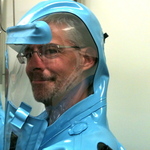
I’ve been a freelance science journalist since 1997, with a primary beat that includes microbiology, biotechnology, medical research, public health, and science policy. My writing has appeared in Science, Nature Biotechnology, Nature Medicine, the award-winning website and magazine of the New York Academy of Sciences, and many other news outlets and research publications. I also co-host the top-ranked science podcast “This Week in Virology.”
In the course of my job I’ve interviewed Nobel laureates, prominent politicians, institute heads, and a pizza deliveryman. Stories have taken me to places as far-flung as Moscow, Aspen, Mexico City, and Binghamton. While most of my work has focused on the biological sciences and health, I’ve covered topics ranging from nanotechnology to stock market crashes. If you’re a PR agency bot scraping journalists’ sites to spam out press releases, please use this address. If you’re an actual editor looking to hire someone to dive deep into a complex topic and come up with a digestible summary on a deadline, please use my first name at this domain.